
Public spaces play a vital role in shaping how communities interact, connect, and thrive. Parks, plazas, streets, and gathering places are not simply physical environments—they are social spaces where relationships are formed and local identity is expressed.
However, traditional planning approaches have often overlooked the importance of community participation in the design process.
Community-led design addresses this gap by involving residents directly in shaping the spaces they use every day.
Understanding Community-Led Design
Community-led design is a collaborative approach that brings together residents, designers, and stakeholders to co-create solutions for public spaces.
Rather than relying solely on external expertise, this process values local knowledge and lived experiences.
Residents often have deep insights into how spaces are used, what challenges exist, and what improvements could make the greatest difference.
When these perspectives are included in the design process, the resulting solutions tend to be more relevant and sustainable.
Building Stronger Communities
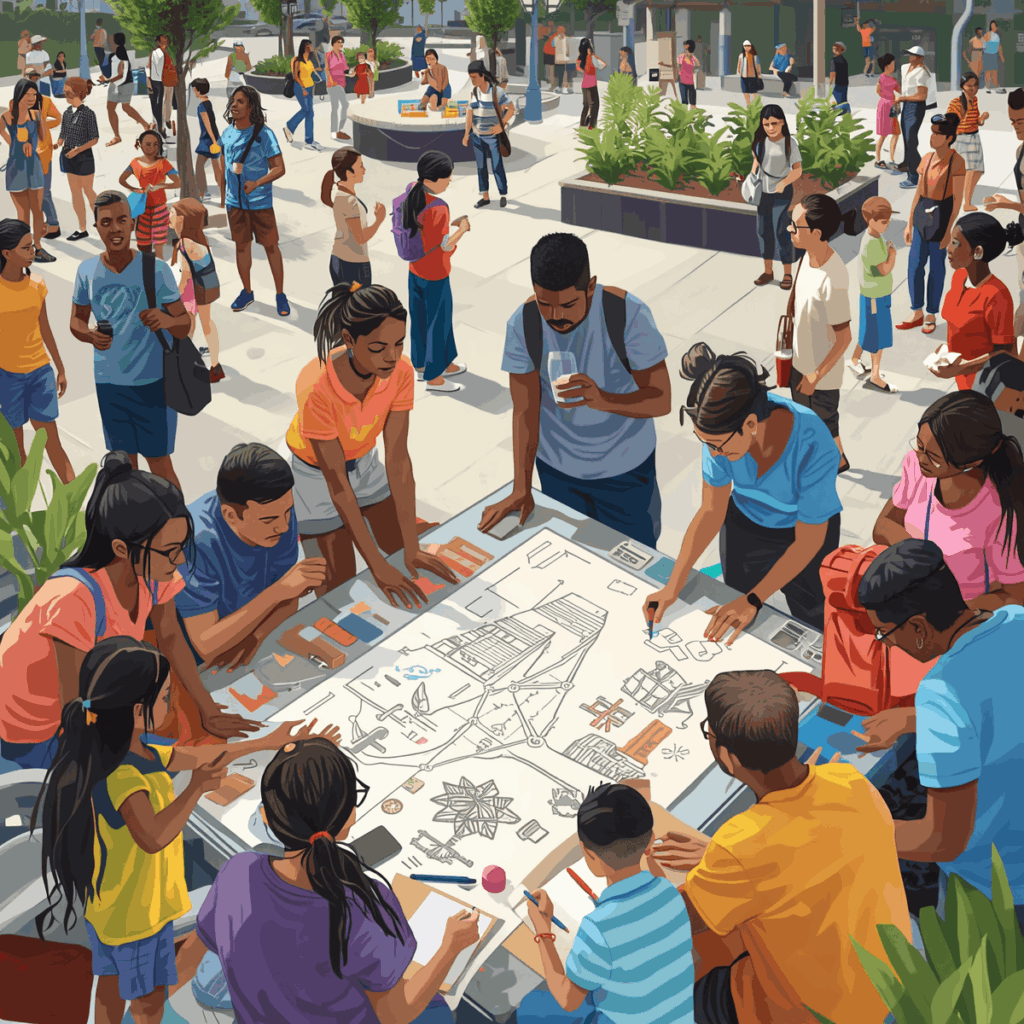
Participating in design processes helps build stronger connections within communities.
Workshops, discussions, and collaborative activities bring people together around shared goals.
These interactions encourage dialogue between neighbours who may not otherwise interact, strengthening social bonds and community cohesion.
Over time, these relationships contribute to a stronger sense of belonging and shared responsibility for local spaces.
Creating Spaces that Reflect Local Identity
Every neighbourhood has its own character, culture, and history.
Community-led design allows these unique qualities to shape how spaces are developed.
From murals created by local artists to seating areas designed around community traditions, these elements give public spaces a distinctive identity that cannot be replicated through standardised design.
Encouraging Long-Term Stewardship
When communities participate in designing spaces, they are more likely to care for and maintain them.
This sense of ownership encourages long-term stewardship, ensuring that improvements remain valued and maintained over time.