
Improving public spaces does not always require large infrastructure projects or significant funding.
Many communities have discovered that small, affordable interventions can dramatically enhance how shared spaces are used.
These approaches, often referred to as tactical urbanism, focus on quick, practical improvements that can be implemented with limited resources.
What is Tactical Urbanism?
Tactical urbanism involves temporary or low-cost design interventions intended to test new ideas for public spaces.
These projects allow communities to experiment with changes before committing to permanent infrastructure.
Examples include painted street murals, pop-up seating areas, temporary parks, and pedestrian-friendly street layouts.
The Benefits of Small-Scale Projects
Small-scale projects offer several advantages.
They are typically faster to implement, require fewer approvals, and allow communities to see immediate results.
Because these projects are relatively inexpensive, they also encourage experimentation and creativity.
Communities can test multiple ideas and refine them over time.
Encouraging Community Participation
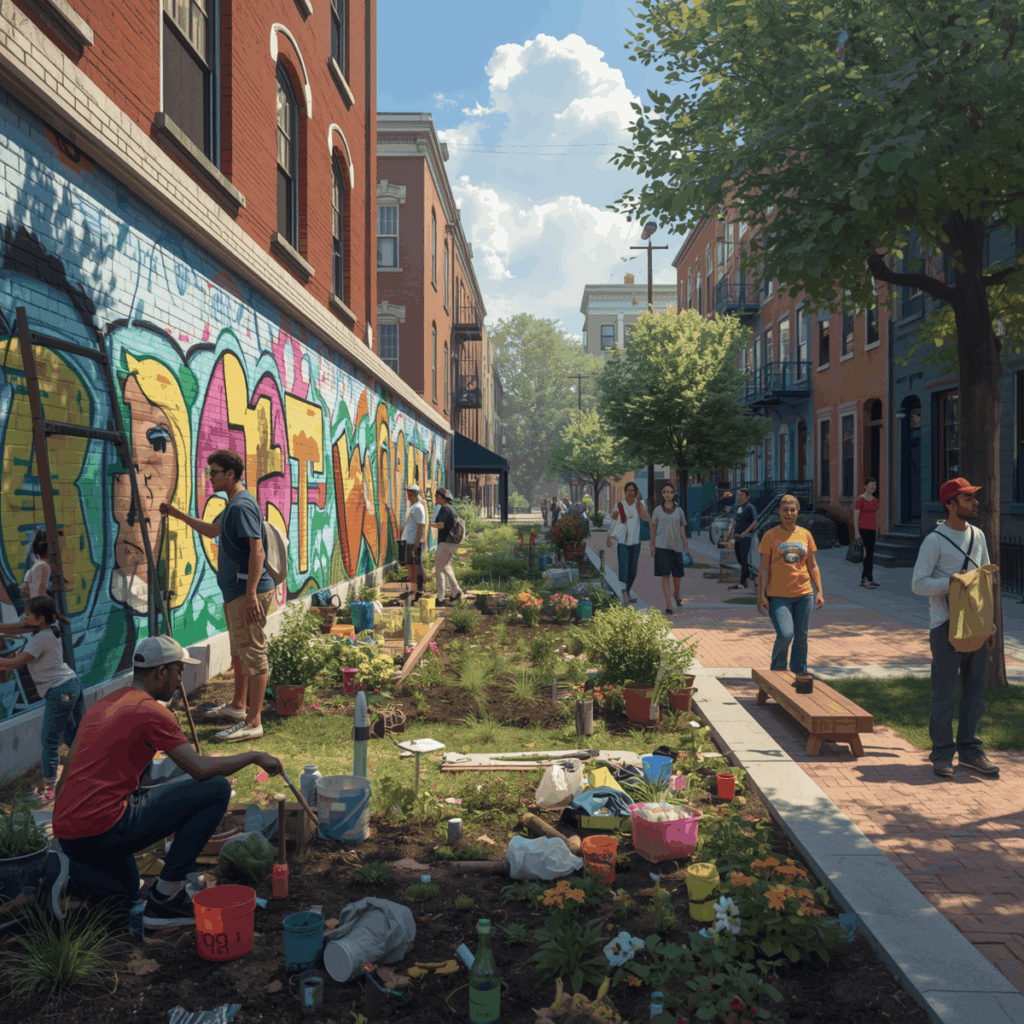
Low-cost projects often rely heavily on community participation.
Volunteers may help paint murals, install temporary seating, or organise local events to activate the space.
These collaborative activities create a sense of ownership and pride among residents.
Scaling Successful Ideas
When a temporary improvement proves successful, it can serve as the foundation for a more permanent solution.
Local governments and organisations may then invest in infrastructure upgrades based on real-world evidence of community demand.